Hamburger Menu

These four-hour interactive modules focus on uniquely human skills - the kind that are essential for success in learning, work, and life in the 21st century.

Each module is designed to help you:

  • Explore key concepts
  • Apply them in real-world contexts
  • Reflect on what you've learned

Click on the tiles below to learn more about the module.

How modules are built

FUSION Module Development Process

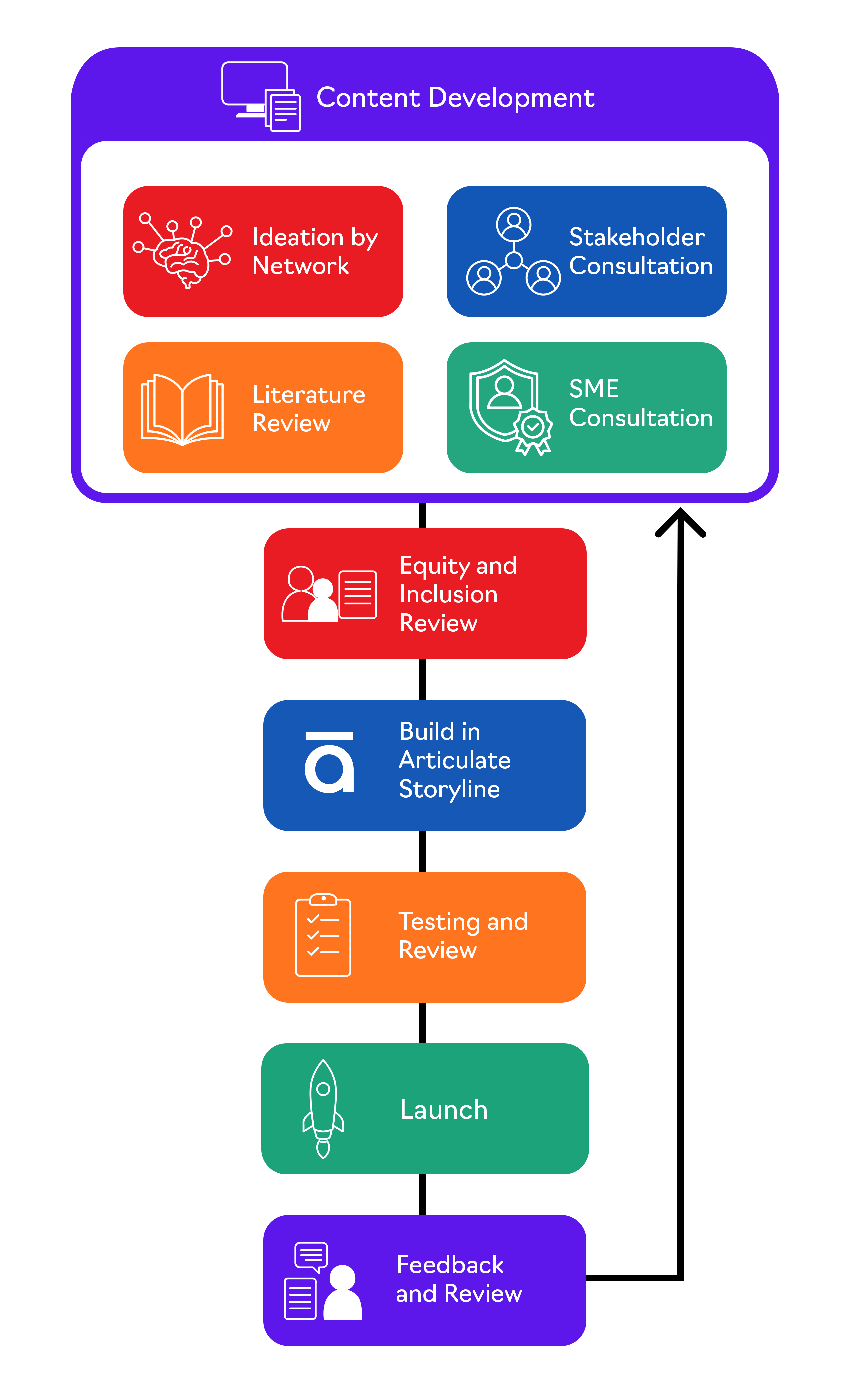
The creation of a FUSION e-learning module follows a collaborative, research-informed, and equity-focused approach:
FUSION Module Development Process
  1. Ideation by the Network
    The process begins with the FUSION network identifying which skill area should be addressed in a new module. This decision is guided by the needs of underserved university student populations.
  2. Stakeholder Consultation
    Input is gathered from both internal university stakeholders and external partners to ensure the module is relevant, inclusive, and aligned with broader educational goals.
  3. Literature Review
    An instructional designer conducts a thorough review of existing literature to ground the module in current research and best practices.
  4. Subject Matter Expert Consultation
    An instructional designer consults with a subject matter expert to validate the relevance and appropriateness of the proposed topics for the module.
  5. Content Development
    A team of instructional designers develops the module content, with close attention to clarity, instructional quality, and alignment with learning outcomes.
  6. Equity and Inclusion Review
    An Equity and Inclusion Learning Specialist reviews the content to ensure it reflects inclusive practices and supports diverse learners.
  7. Module Build in Articulate Storyline
    The content is then built into an interactive e-learning module using Articulate Storyline.
  8. Testing and Internal Review
    The module undergoes testing and review by team members to identify any technical issues or usability concerns.
  9. Launch
    Once finalized, the module is launched and made available to learners.
  10. Feedback and Continuous Improvement
    Feedback is collected from users and stakeholders, and the module is updated as needed to maintain relevance and effectiveness.